

Entrepreneurial Projects & Initiatives
Welcome to a curated collection of my personal projects, where each project showcases my creativity, critical thinking, and continuous growth. Through these projects, I explores new ideas, challenges myself across different fields, and transforms concepts into meaningful outcomes, reflecting both my initiative and evolving ambition.

Sac Tien Project
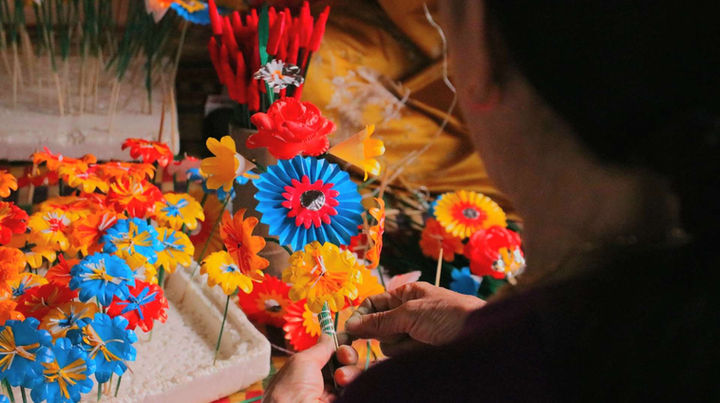
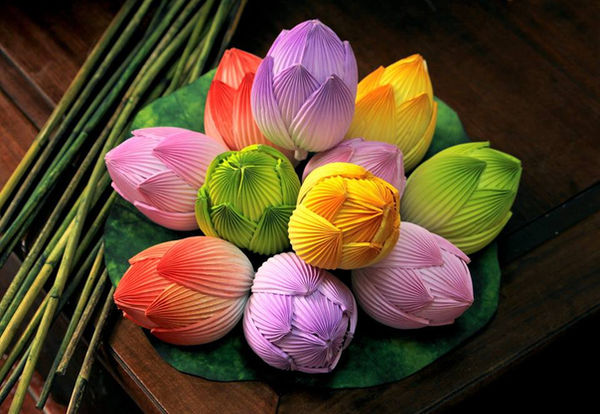
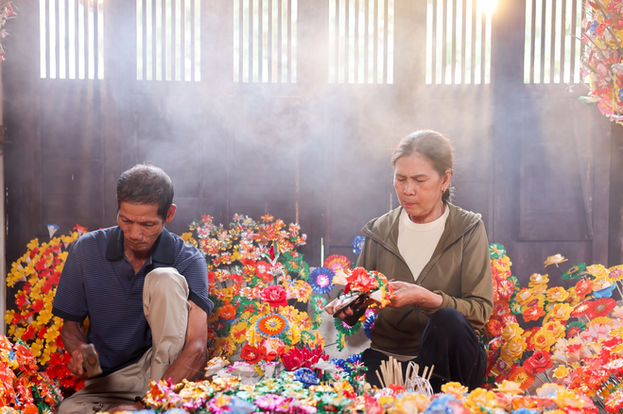
A community-based initiative supporting Thanh Tien paper flower village in Hue

Releaf Project
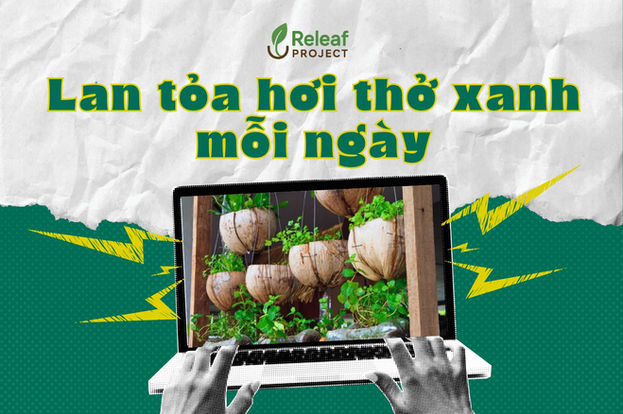
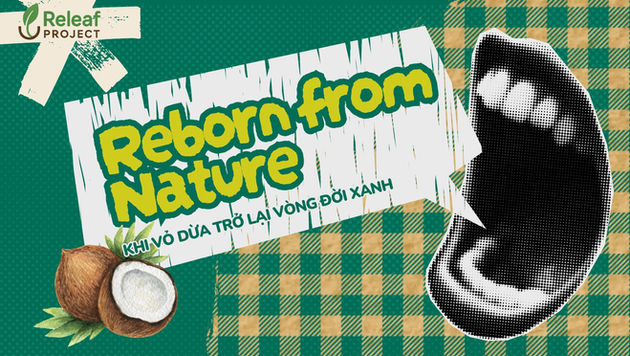
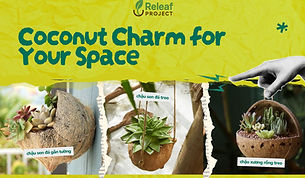
A student-led sustainability project promoting eco-friendly living by planting trees in coconut shells
Sac Tien Project
Growing up in Hue, I was always surrounded by something quietly beautiful.
It was not something loud or modern. It was something older, slower, and deeply rooted in time. From embroidered fabrics to traditional crafts hidden in small alleys, Hue carries within it a cultural identity that is both delicate and powerful. Yet, for a long time, I did not truly see it.
Until one day, I realized something was missing.
When Beauty Starts to Fade
The idea of this project did not come from ambition. It came from a sense of loss.
I began to notice that many traditional handicraft products in Hue were slowly disappearing from the daily lives of young people. Craft villages that once thrived were now quieter. Artisans who had spent decades mastering their skills were struggling to sustain their work. Their products, though meaningful and rich in cultural value, were no longer reaching the audience they deserved.
The problem was not that these crafts lacked beauty.
The problem was that they lacked connection.
In a world driven by fast consumption and modern trends, traditional craftsmanship was being left behind.
That realization became the starting point of everything.

A Gap Between Tradition and Youth
Through observation and research, I came to understand a deeper issue.
Young people in Hue, including myself, rarely engaged with traditional handicrafts. Not because we did not care, but because we did not feel connected to them. The designs often felt distant, the storytelling was missing, and the way these products were presented did not resonate with a new generation.
At the same time, artisans faced limitations in:
-
marketing and communication
-
digital presence
-
adapting products to modern lifestyles
This created a gap.
A gap between heritage and innovation.
A gap between those who create and those who could appreciate.
And most importantly, a gap between the past and the future.
Bridging Tradition and Modern Identity
This project was created with a simple but meaningful goal. To reconnect young people with Hue’s traditional craftsmanship by transforming the way these products are perceived, experienced, and shared. Instead of treating handicrafts as something static and nostalgic, the project approaches them as something alive. Something that can evolve.
The focus was placed on storytelling, bringing out the cultural meaning behind each product, besides with visual presentation, making crafts more appealing to younger audiences and reimagining usage, integrating traditional items into modern lifestyles. Through these efforts, the project aims not only to preserve craftsmanship, but to reposition it. Not as something of the past, but as something that belongs to the present.
Working on this project was more than just building an idea. It was a process of listening. Listening to artisans who have dedicated their lives to their craft. Listening to peers who seek identity in a rapidly changing world. And listening to myself, trying to understand what role I could play in all of this.
There were challenges along the way. Limited resources, lack of experience, and moments of uncertainty. But each difficulty became part of the learning process. Because this project was never just about the outcome. It was about understanding responsibility.


A Future Where Tradition Lives On
This project is only a starting point. In the future, it aims to expand by:
-
building stronger connections between artisans and young consumers
-
developing more innovative product concepts
-
leveraging digital platforms to bring Hue’s crafts to a wider audience
For me, this project is not just an initiative. It is a realization that cultural heritage is not something we inherit passively. It is something we choose to protect, reinterpret, and carry forward. And perhaps, in a city as gentle as Hue, the most meaningful changes do not come from loud revolutions.
They come from quiet efforts.
From small ideas.
From young people who decide that something worth preserving should not be forgotten.
And this is where my journey begins.

Releaf Project
Growing up in a rapidly developing environment, I was always taught that progress is something to be proud of. New buildings, growing cities, and expanding lifestyles were often seen as signs of success. But over time, I began to notice something else quietly growing alongside it.
Waste. Pollution. Disconnection.
And that was where the idea of this project began.

A Quiet Realization That Turned Into Action
I did not start this project because I wanted to build something impressive. I started it because I could not ignore what I was seeing anymore.
At first, it was just small things. Plastic bottles left behind after events. Trash piling up in places where people gathered every day. The kind of things that everyone notices, but no one really stops to think about. Including me.
For a long time, I thought environmental issues were something distant, something too big to be solved by individuals. Something that belonged to governments, organizations, or people with more power and resources. But over time, that belief started to feel like an excuse.

When Awareness Becomes Uncomfortable
The more I paid attention, the more uncomfortable I became.
It was not just about pollution anymore. It was about behavior. People knew. Everyone knew that environmental protection mattered. We learned about it in school, we saw it online, we heard it everywhere. But knowing did not translate into action. Convenience always came first. Habits remained unchanged.
And I realized that I was part of that pattern too. That was the turning point. Because the real problem was not a lack of information. It was a lack of connection. Environmental issues felt too far away from daily life, too abstract, too easy to ignore.
An Idea That Started Small
I did not begin with a perfect plan. I only had a question in my mind.
"What if environmental responsibility did not feel like a burden, but something natural? Something simple enough to become part of everyday choices?"
This project grew from that question. Instead of trying to solve everything at once, I focused on small, realistic actions. The kind of changes that students like me could actually make. The kind that do not require perfect conditions, only intention.
Because I believe that change becomes possible when it feels achievable.
Looking Forward
I do not see this as something that ends here. If anything, this is only the beginning. In the future, I want to expand this project into something more connected. A space where young people are not just informed, but involved, where sustainability is not presented as an obligation, but as a shared value.
I want to explore ways to make environmental responsibility more visible, more relatable, and more integrated into everyday life. Because real change does not happen when people are told what to do, it happens when they start to care.
If there is one thing this journey has taught me, it is this. The environment is not a distant issue. It is something we interact with every day, through every choice we make. And the question is not whether the problem exists. The question is whether we choose to respond to it.
For me, this project is my answer.
Not a perfect one.
Not a complete one.
But a beginning.

Understanding the Bigger Picture
As I worked on this project, I began to see the environmental issue from a broader perspective. In a developing society, growth often comes with trade-offs. Urbanization increases waste. Fast consumption replaces sustainability. Systems struggle to keep up with the speed of change. But what stood out to me the most was not the scale of the problem, it was how quickly people adapted to it.
Pollution became normal. Waste became invisible. And responsibility became optional. That normalization is what makes environmental issues so difficult to address.
At some point, this stopped feeling like just a project. It became something personal. It changed the way I think about my own choices. It made me more aware of the impact behind small actions. It forced me to question habits that I had never considered before. And more importantly, it made me realize that influence does not always come from large actions. Sometimes, it comes from consistency from choosing differently, again and again.

